500 Overthinkers Journal Prompts Canva: A Practical Tool for Calmer, Clearer Thinking
If your mind races at 2 a.m. replaying conversations, dissecting decisions, or spiraling into “what ifs,” you’re not alone—and you don’t have to stay stuck in that loop. Overthinking isn’t just mental noise; it’s a pattern that drains energy, delays action, and clouds self-trust. That’s where 500 Overthinkers Journal Prompts Canva steps in—not as a quick fix, but as a grounded, accessible, and deeply practical companion for anyone ready to shift from analysis paralysis to mindful awareness.
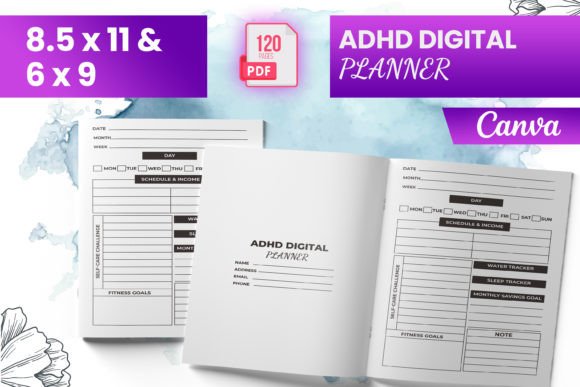
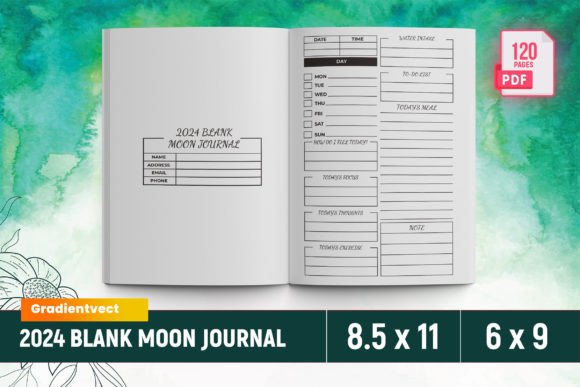
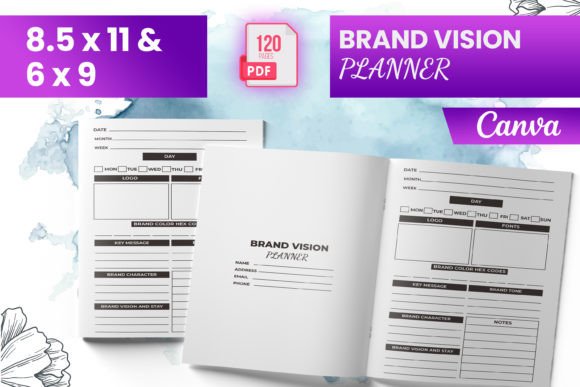
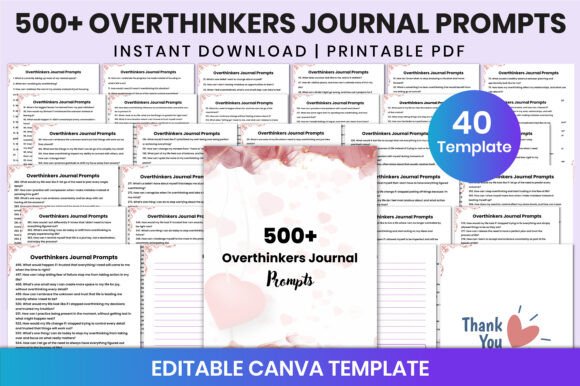
This resource is more than a list of questions. It’s a thoughtfully curated collection of 500 journal prompts designed specifically for overthinkers—people who feel overwhelmed by their own thoughts, struggle with indecision, experience anxiety around small choices, or hold onto past moments long after they’ve passed. Built for use in Canva and optimized for KDP interior formatting, the 500 Overthinkers Journal Prompts Canva package gives users both flexibility and structure: an editable Canva link for personalization, plus print-ready PDF files (8.5 × 11 inches, 40 pages, 300 DPI, CMYK, no bleed) ideal for self-publishing or daily reflection.
Why Overthinking Feels So Hard—and Why Structure Helps
Overthinking often masquerades as productivity—“I’m just preparing,” “I’m weighing all options,” “I want to get it right.” But in reality, it frequently leads to exhaustion without resolution. Common challenges include:
- Difficulty making even low-stakes decisions (e.g., what to eat, which email to reply to first)
- Replaying interactions and assigning unintended meaning to neutral comments
- Feeling emotionally drained after routine social exchanges
- Using rumination as a misguided form of control or safety
- Struggling to separate helpful reflection from unproductive repetition
What makes overthinking especially resistant to change is its self-reinforcing nature: the more you try to “solve” anxious thoughts, the more mental real estate they occupy. That’s why traditional advice like “just stop thinking about it” rarely works. What does work is redirecting attention with intention—using gentle, consistent prompts that invite curiosity instead of criticism.
How 500 Overthinkers Journal Prompts Canva Supports Real Change
The power of the 500 Overthinkers Journal Prompts Canva lies in its design philosophy: simplicity with depth. Each prompt is crafted to interrupt automatic thought loops and guide the writer toward presence, perspective, or compassion—not perfection. For example:
- “What’s one thing I know to be true right now—even if everything else feels uncertain?” — grounds attention in the present moment
- “If my best friend were in this situation, what would I gently tell them?” — builds self-compassion muscle
- “What decision am I avoiding—and what’s the smallest, kindest step I could take today?” — reduces overwhelm through micro-action
Unlike generic journal templates, these prompts recognize the overthinker’s tendency toward complexity—and meet it with clarity. They don’t ask for essays. They invite brief, honest responses—sometimes just three sentences, sometimes a single word. This lowers the barrier to entry, making consistency possible even on high-anxiety days.
Practical Ways to Use the Resource—No “Right” Way Required
There’s no universal formula—but there are highly effective ways to integrate the 500 Overthinkers Journal Prompts Canva into real life. Here’s how different users commonly begin:
- The Morning Anchor: Choose one prompt each morning—before checking email or scrolling—to set a reflective, intentional tone for the day.
- The Evening Release: Use a “brain dump” prompt (e.g., “What thoughts kept circling today? Which ones can I let go of tonight?”) to signal closure and improve sleep quality.
- The Decision Companion: When facing uncertainty, flip to the “Clarity & Choice” section and respond to two prompts side-by-side—then notice what shifts in your body or breath.
- The KDP Creator: Authors and wellness entrepreneurs use the editable Canva file to brand, reformat, or expand the interior—adding affirmations, illustrations, or guided instructions before publishing their own version.
Because the Canva link is fully editable, users can adjust fonts, colors, spacing, or layout to match personal preferences—or adapt prompts for teens, therapists, coaches, or corporate mindfulness programs. The PDF interior files are pre-formatted for professional printing, saving hours of technical setup for those launching their own journal on Amazon KDP.
What Makes This Different From Other Journaling Tools?
Many journals ask broad questions (“How are you feeling today?”) or focus heavily on gratitude—valuable, yes, but not always accessible when the mind feels flooded. The 500 Overthinkers Journal Prompts Canva stands out because it:
- Names the pattern: It acknowledges overthinking as a real, common, and addressable experience—not a flaw.
- Prioritizes accessibility: No writing stamina required. Responses can be short, messy, or even drawn.
- Builds skill over time: Prompts progress subtly—from awareness (“What thought just repeated itself?”) to agency (“What’s one boundary I can honor tomorrow?”).
- Supports multiple goals: Whether you’re seeking emotional regulation, creative clarity, better sleep, or stronger self-trust, there’s a prompt pathway that fits.
Importantly, it doesn’t demand transformation overnight. It meets you where you are—even if that’s tired, skeptical, or convinced “journaling won’t help me.” Consistency matters more than length. One prompt, done honestly, once a week, can begin reshaping neural pathways over time.
Getting Started—Gently and Without Pressure
You don’t need special supplies, perfect conditions, or hours of quiet. Start with what you have: five minutes, a notebook or printed page, and willingness—not certainty. Try this:
- Open the Canva file or print a single page.
- Scan the prompts until one catches your attention—even if it feels unrelated.
- Write freely for 90 seconds. No editing. No judgment. Just what comes up.
- Close the journal. That’s enough.
Repeat when it feels useful—not obligatory. Overthinking thrives on pressure; healing grows in permission. And if you find value in this tool, consider following the creator’s profile for updates—new prompt bundles, themed editions (like anxiety-specific or relationship-focused versions), or printable extras designed to deepen the practice.
Remember: You’re not trying to silence your mind. You’re learning to listen to it with kindness—and choose where to place your attention. With the 500 Overthinkers Journal Prompts Canva, that choice becomes simpler, gentler, and more within reach—one thoughtful sentence at a time.